

Credit Jon Gilbert Fox
ABOUT ME
I’m a research professor in economics at Dartmouth College and a Senior Fellow at the Yale School of Public Health. My research interests include measuring productivity and efficiency in health care and the savings behavior of retirees. I am a member of the National Institute of Medicine, and until recently was Director of the Economics of Aging program at the National Bureau of Economic Research.
Featured Research
NBER Working Paper No. 34659 (provisional acceptance, American Economic Journals: Economic Policy)
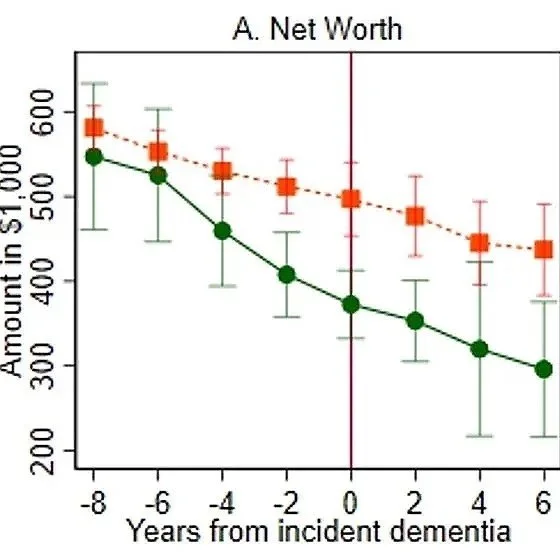
Jing Li, Kathleen McGarry, Lauren Nicholas, Jonathan Skinner
Existing evidence suggests that wealth may decline before dementia onset, but the mechanisms underlying these reductions are poorly understood. Using longitudinal data from the Health and Retirement Study, we compare household finance trajectories for individuals who later develop dementia and those who do not. We find that wealth divergence between the two groups is not explained by reduced earnings, higher healthcare spending, intentional “spend-down” to qualify for Medicaid coverage, state-dependent utility, or reverse causation by which wealth declines cause dementia. Instead, our results point to impaired financial decision-making beginning about six years prior to clinically recognizable dementia.
NBER Working Paper No. 34553 (Russell Sage Journal of the Social Sciences, forthcoming)
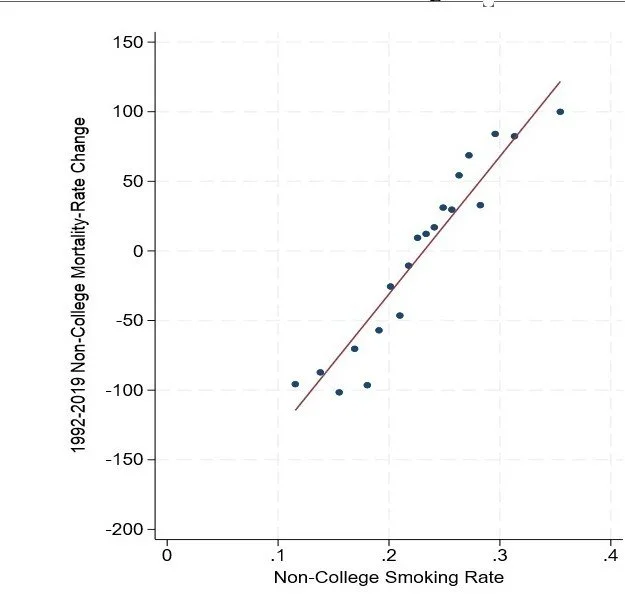
Christopher Foote, Ellen Meara, Jonathan Skinner, Luke Stewart
The education-mortality gradient has increased sharply in the last three decades, with the life-expectancy gap between people with and without college degrees widening from 2.6 years in 1992 to 6.3 years in 2019 (Case and Deaton 2023). During the same period, mortality inequality across counties rose by 30 percent, accompanied by an increasing rural health penalty. Using county- and state-level data from 1992 to 2019, we demonstrate that widening educational differences in midlife mortality, rising geographic inequality in mortality, and the growing rural health disadvantage arose from a shift in the geographic patterns of mortality among college and non-college populations. We find a sharp decline in both mortality rates and geographic inequality for college graduates, but the reverse for people without a college degree; spatial inequality has become amplified. Smoking rates play a key role in explaining all three patterns, with secondary roles attributed to income, other health behaviors, and state policies.
NBER Working Paper 34204 (Journal of Health Economics, forthcoming)
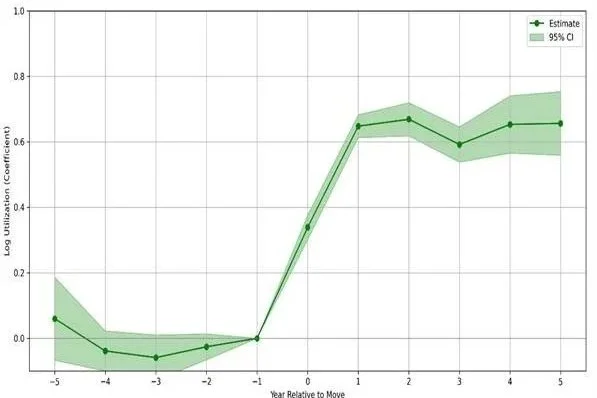
Roxana Leal, William P. Luan, Jonathan Skinner, John Zhou
There is increasing evidence on regional variations in US Medicare health care utilization based on older patients who move. Yet moving for the elderly population is typically endogenous, and evidence is limited for younger populations. In this paper, we harness the mandatory migration of military personnel to estimate supply and demand factors in a system of care for younger enrollees in which military physicians are salaried and copayments and deductibles are negligible. Our preferred estimates imply that supply effects explain between one-half and two-thirds of overall regional variation. These variations cannot be explained by differences in quality of care, but appear consistent with location-specific differences in physician beliefs.
NBER Working Paper No. 34553 (forthcoming, Russell Sage Journal of the Social Sciences)
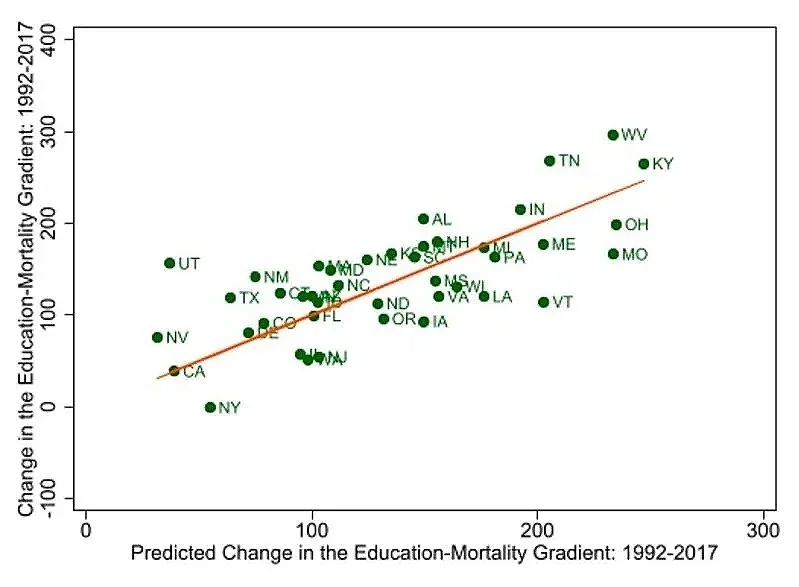
Christopher Foote, Ellen Meara, Jonathan Skinner, Luke Stewart
The education-mortality gradient has increased sharply in the last three decades, with the life-expectancy gap between people with and without college degrees widening from 2.6 years in 1992 to 6.3 years in 2019 (Case and Deaton 2023). During the same period, mortality inequality across counties rose by 30 percent, accompanied by an increasing rural health penalty. Using county- and state-level data from 1992 to 2019, we demonstrate that widening educational differences in midlife mortality, rising geographic inequality in mortality, and the growing rural health disadvantage arose from a shift in the geographic patterns of mortality among college and non-college populations. We find a sharp decline in both mortality rates and geographic inequality for college graduates, but the reverse for people without a college degree; spatial inequality has become amplified. Smoking rates play a key role in explaining all three patterns, with secondary roles attributed to income, other health behaviors, and state policies.

JAMA Network Open
Ellesse-Roselee L. Akré, Deanna Chyn, Heather A. Carlos, Amber E. Barnato, Jonathan Skinner
Considerable racial segregation exists in U.S. hospitals which cannot be explained by where patients live. Using 2019 Medicare claims data linked to geographic data, we define a hospital’s market based on ZIP-code based driving time, and estimate the racial composition of all hospitalizations in that market. We then compare the racial composition of the hospital with the racial composition of its market. In our sample of 4.9 million hospital admissions, we find a considerable degree of sorting, with Black Medicare enrollees more likely admitted to some hospitals in their market, and less likely to be admitted to other hospitals nearby. At a regional level, we observed the greatest degree of patient sorting in the New York, Chicago, and Detroit HRRs.
NBER WORKING PAPER SERIES
Amitabh Chandra, Carrie H. Colla and Jonathan S. Skinner
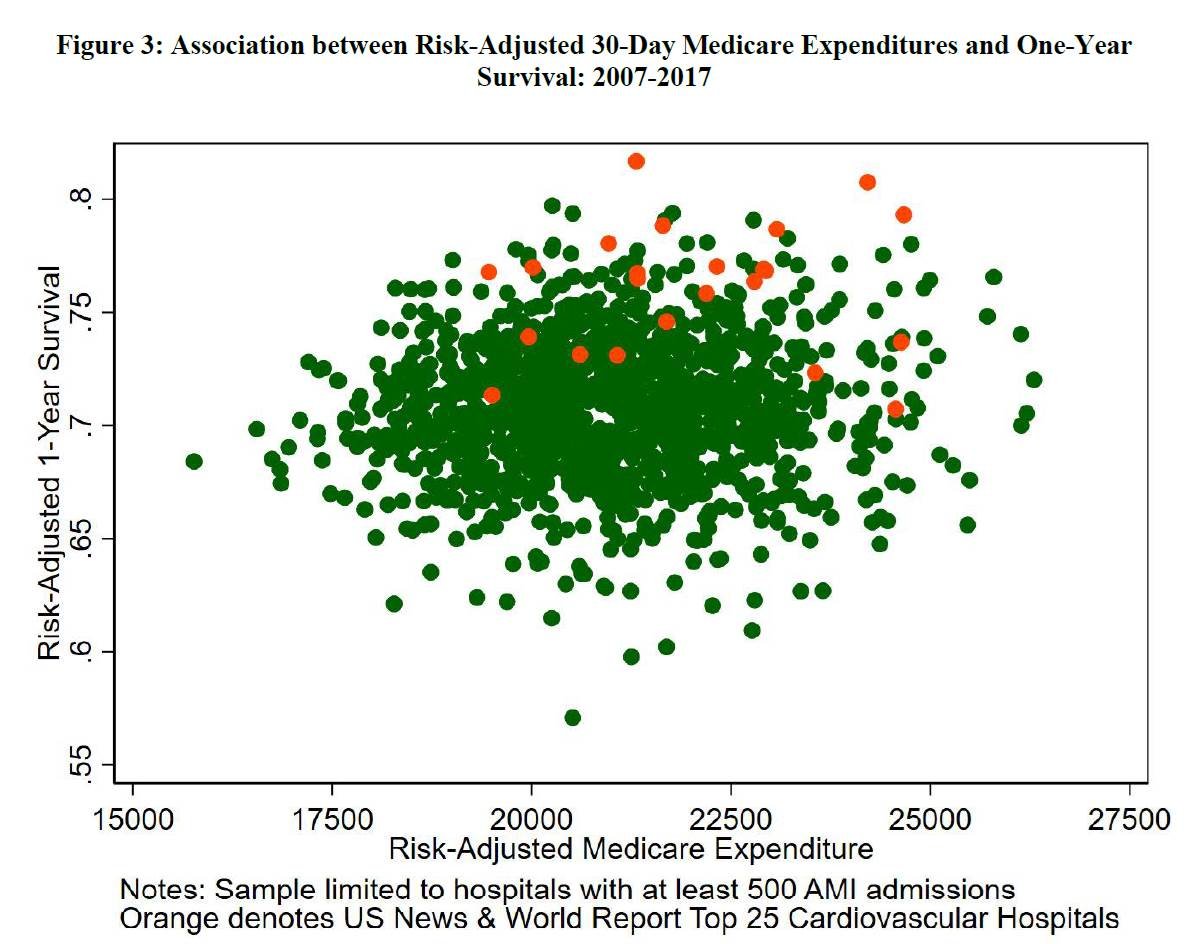
There are widespread differences in total factor productivity across producers in the U.S. and around the world. To help explain these variations, we devise a general test for misallocation in input choices – the underuse of effective inputs and overuse of ineffective ones. Misallocation implies that conditional on total input use, the return to using a particular input is not zero (a positive return implies underuse, and a negative return implies overuse). We measure misallocation across hospitals, where inputs and outputs are better measured than in other industries. Applying our test to a sample of 1.6 million Medicare beneficiaries with heart attacks (of which 436 thousand were admitted by ambulance), we reject the hypothesis of productive efficiency; moving a patient from a 10th percentile to a 90th percentile hospital with respect to misallocation, holding spending constant, is predicted to increase survival by 3.1 percentage points. With misallocation accounting for as much as 25 percent of the variation in hospital productivity, our results suggest that how the money is spent, rather than how much money is spent, is central to understanding productivity differences both in health care, and in the rest of the economy.
Social Science & Medicine
James O’Malley, Thomas Bubolz, Jonathan Skinner
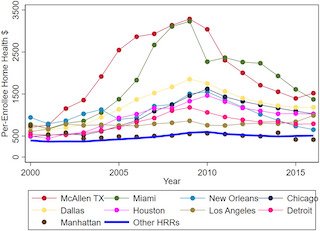
Many studies have examined the diffusion of health care innovation but less is known about the diffusion of health care fraud. In this paper, we consider the diffusion of potentially fraudulent Medicare home health care billing in the United States during 2002–16, with a focus on the 21 hospital referral regions (HRRs) covered by local Department of Justice (DOJ) anti-fraud “strike force” offices. We hypothesize that patient-sharing across home health care agencies (HHAs) provides a mechanism for the rapid diffusion of fraudulent strategies. We measure such activity using a novel bipartite mixture (or BMIX) network index, which captures patient sharing across multiple agencies and thus conveys more information about the diffusion process than conventional unipartite network measures. Using a complete population of fee-for-service Medicare claims data, we first find a remarkable increase in home health care activity between 2002 and 2009 in many regions targeted by the DOJ; average billing per Medicare enrollee in McAllen TX and Miami increased by $2127 and $2422 compared to just an average $289 increase in other HRRs not targeted by the DOJ…

JAMA Network Open
Zack Cooper, Olivia Stiegman, Chima D. Ndumele, Becky Staiger, Jonathan Skinner
While the Dartmouth Atlas has established the wide variation in spending and utilization across the U.S. for older Medicare enrollees, much less is known about small-area variations for across all 3 major funders of health care in the US: Medicare, Medicaid, and private insurers.
This study first asks whether either spending or utilization (hospital days) are correlated across Medicare, Medicaid, and the privately insured, to see whether there are regions with simultaneously low spending across all payers, and to test which factors are associated with spending and utilization. The Figure above is the overall composite measure of health care spending in 2016-17 across 3 payers.
Listen to Podcast: Geographic Variations on a Healthcare Spending Theme 8/4/22
Read more and download the data here:

Journal of Economic Perspectives
Benjamin K. Couillard, Christopher L. Foote, Kavish Gandhi, Ellen Meara, and Jonathan Skinner
The 21st century has been a period of rising inequality in both income and health. In this paper, we find that geographic inequality in mortality for midlife Americans increased by about 70 percent between 1992 and 2016. This was not solely because of the increasing importance of “deaths of despair,” or by rising spatial income inequality during the same period. Instead, we find evidence that high-income states in 1992 were better able to enact public health strategies and adopt behaviors that, over the next quarter-century, resulted in pronounced relative declines in mortality. The substantial longevity gains in high-income states led to greater cross-state inequality in mortality.

NBER Working Paper
A. James O’Malley, Thomas A. Bubolz, Jonathan S. Skinner
Many studies have examined the diffusion of health care innovations but less is known about the diffusion of health care fraud. In this paper, we consider the diffusion of potentially fraudulent Medicare home health care billing in the United States during 2002-16, with a focus on the 21 hospital referral regions (HRRs) covered by local Department of Justice anti-fraud “strike force” offices. We hypothesize that patient-sharing across home health care agencies provides a mechanism for the rapid diffusion of fraudulent strategies; we measure such activity using a novel bipartite mixture (or BMIX) network index. First, we find a remarkable increase in home health care activity between 2002 and 2009 in some but not all regions; average billing per Medicare enrollees in McAllen TX and Miami increased by $2,127 and $2,422 compared to a $289 increase in other HRRs not targeted by the Department of Justice. Second, we establish that the HRR-level BMIX (but not other network measures) was a strong predictor of above-average home care expenditures across HRRs. Third, within HRRs, agencies sharing more patients with other agencies were predicted to increase spending the following year. Finally, the initial 2002 BMIX index was a strong predictor of subsequent changes in HRR-level home health billing during 2002-9. These results highlight the importance of bipartite network structure in diffusion and in infection models more generally.